


acorenone
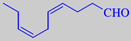
4(Z),7(Z)-decadienal

(Z)-asarone
Acorus calamus (Araceae) Sweet flag
Calmus is recognizable by its long, narrow, one-sidedly undulating leaves, and by its characteristic inflorescence. This marsh plant belonging to the Arum family probably originates in the area between the Black Sea and the Caspian Sea. It has been used as a medicinal plant since Antiquity and is widespread in much of the world.
In Denmark, for example, it was introduced by the monks before the Reformation and has spread from the monasteries. It is found here and there along the shore of lakes, streams and ponds, forming dense stands.
The photos shown were taken at the edge of the lake surrounding Frederiksborg Castle.
The flowers have a putrid smell, but the plant as a whole has a strong, aromatic odour, especially noticeable when the leaves are broken. Calmus oil is obtained by distillation of the fresh or dried underground stems. It has an attractive, spicy-aromatic character and has been used in perfumes of the so-called Chypre type.
The main constituents are sesquiterpene ketones, acorenone being representative. Trace amounts of unsaturated aliphatic aldehydes, e.g. 4(Z),7(Z)-decadienal, strongly influence the odour. Moreover, the oil contains varying amounts of the phenol ether (Z)-asarone [6].

-camphor.gif)
(+)-camphor
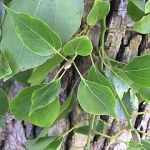
Cinnamomum camphora (Lauraceae) Camphor laurel, Camphor tree
The camphor tree is a native of China, Japan and Formosa. It is a beautiful tree reaching an impressive size (40 m). It is commonly planted near temples and other places of special importance.
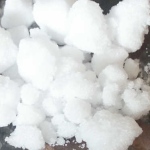
(+)-Camphor occurs in all parts of the tree in high concentration (ca. 50 % of the essential oil) [6]. Pockets within the wood may hold crystallized camphor like they were gemstone caves. Camphor is isolated by passing steam through the pulverized wood and condensing the vapours. It crystallizes from the oily portion of the distillate and is purified by pressing and sublimation.
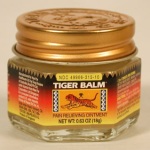
Camphor, a bicyclic terpene ketone, is a colourless, crystalline material (mp. 180 ºC) with a characteristic, penetrating, slightly minty (cooling) odour. It dilates the blood vessels and is mildly antiseptic. Camphorated spirits were formerly a remedy in medicine. Nowadays, most people know about camphor from Tiger Balm ®, Mentholatum ® and the like, good for scratches and minor skin infections. See also cinnamon.
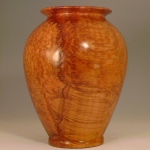
Camphor wood has a characteristic 'burl grain' pattern. It is used for finer cabinet-making.
Etymology: Lat. camphora, from Arabic káfour, a solid essential oil.
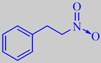
1-nitro-2-phenylethane
Aniba canelilla (Lauraceae) Casca Preciosa
Aniba canelilla is a close relative to the famous Brazilian rosewood, Aniba rosaeodora, but has an entirely different and quite extraordinary essential oil, completely dominated by the unusual compound 1-nitro-2-phenylethane. Actually this compound (which is biochemically derived from the amino acid phenylalanine) is found as a trace constituent in the scent of many flowers, e.g. Madagascar jasmine and orange flower, but in A. canelilla it is present in substantial quantities - up to more than 70 pct. of the essential oil from the bark and leaves! Another major ingredient is methyleugenol [228].
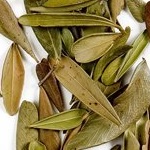
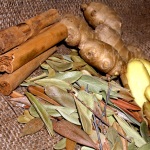
1-Nitro-2-phenylethane has a powerful sweet-floral, warm-spicy odor reminiscent of cinnamon. The dried leaves of A. canelilla are used locally in South America for hot and spicy teas, e.g. with cinnamon and ginger (photos). Like many derivates of nitrogen oxide, 1-nitro-2-phenylethane has cardiovascular effects, and so A. canelilla has been used in folk medicine [229].
Etymology: canelilla, dim. of canela, i.e. 'little cinnamon'.
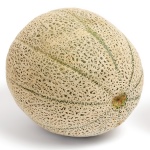
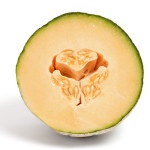
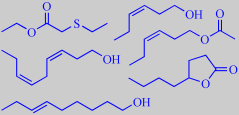
cantaloupe flavour impact compounds
Cucumis melo var. cantalupensis (Cucurbitaceae), 'Musk melon'
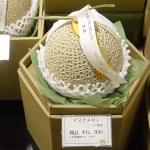
The native melon, C. melo, is found in Sudan and India and has small smooth fruits the size of plums completely devoid of flavour. Already at the time of the pharaohs however, the Egyptians had cultured varieties comparable with modern types. Today there are multitudes of varieties, the cantaloupe melon having one of the richest flavours. Last photo shows a selected Japanese specimen intended as a gift.
Wang and Jianming used GC-olfactometry and GC-MS to indentify the aroma impact compounds of C. melo var. cantalupensis and found the six most important to be ethyl 2-(methylthio)acetate ('fruity'), (Z)-3-hexenyl acetate ('fruity'), (Z)-3-hexen-1-ol ('green'), (E)-6-nonen-1-ol ('creamy, sweet'), gamma-octalactone ('sweet, lactonic'), and (Z,Z)-3,6-nonadien-1-ol ('melon') [357].
caramboxin

beta-ionone
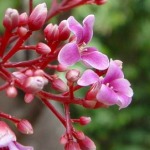
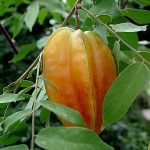
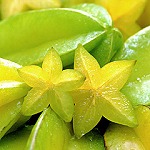
Averrhoa carambola (Oxalidaceae) Starfruit
The small carambole tree origins in tropical Asia, but is now grown in most tropical regions for its edible
five-stringed fruits (berries). Several clones have been developed, some having orange-yellow fruits when ripe, others having greenish-yellow fruits.
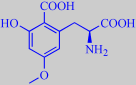
The aroma of the carambole fruit has something in common with that of pea-pods, with a floral ionone-like nuance. The star-shaped, crisp and juicy slices make a refreshing and decorative element in salads, punch bowls, with ice-cream etc. Starfruit contains a toxin called caramboxin which is a health risk to people suffering from certain kinds of kidney disease. Also because of its oxalic acid content eating large amounts of starfruit on an empty stomach is not recommended for anyone.
Carotenoid degradation products like beta-ionone and the four isomeric megastigma-4,6,8-trienes and megastigma-5,8(E)- and (Z)-dien-4-one (see osmanthus) have been detected in the flavour of carambole [10] [11]. The sweet-fruity character has been found to be mainly due to ethyl butanoate, ethyl 2-methylbutanoate, neryl acetate and geranyl acetate [23].
Etymology: Averrhoa, Averrhoas, an Arabian physician and philosopher from Cordoba (Spain, 12'th century).
-carvone.gif)
(+)-carvone
Caraway
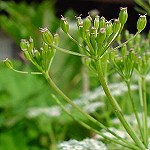
Carum carvi (Umbelliferae)
In Europe, the main producers of caraway seeds are Poland and Hungary.
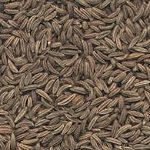
The aromatic seeds are used as a spice in bread, cheese and Sauerkraut.
In Denmark, the traditional dram 'Roed Aalborg' has a caraway flavour,
originally used to hide the off-flavour of the raw spirits.
(+)-Carvone and (+)-limonene are the major ingredients of caraway essential
oil [6] [45].
Interestingly, the two enantiomers of carvone have different odours. (-)-Carvone
is the major component of spearmint
essential oil.